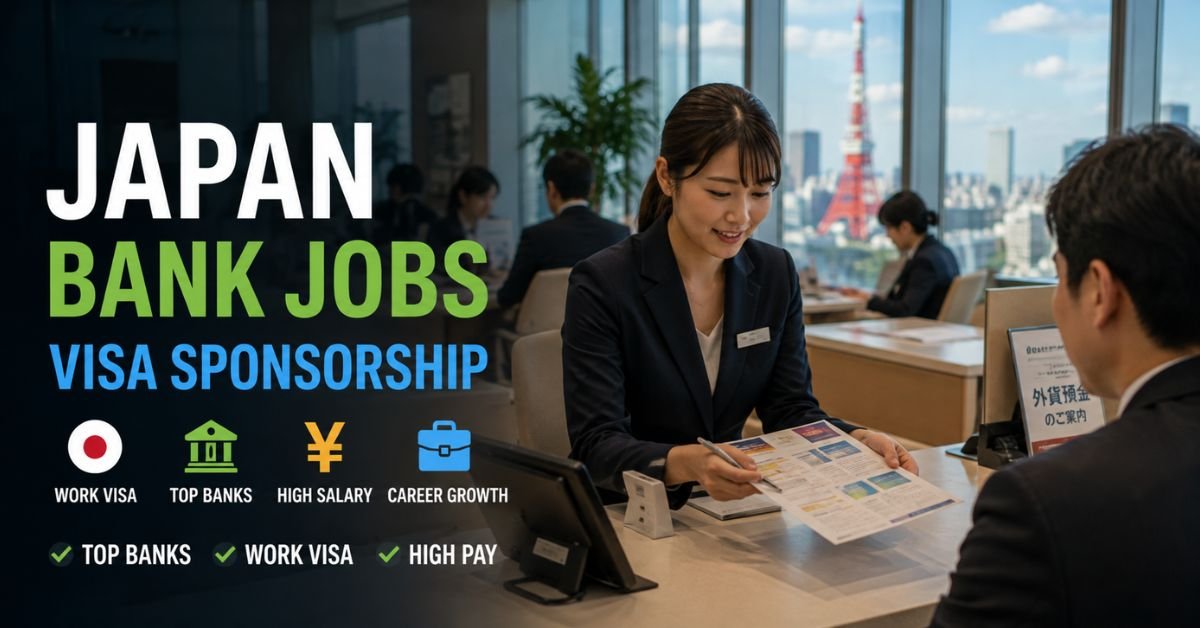
Japan has one of the largest and most stable banking system in Asia. Tokyo hosts regional offices of nearly every major global bank, alongside domestic giants that manage trillions of yen in assets. This size and stability is exactly why the country keeps attracting attention from finance professionals who are living outside Japan.
The demand for foreign workers in this sector did not appear overnight. Japan’s population has been shrinking for years now, and its workforce is aging faster than most developed economies. Banks feel this shortage directly, especially in specialized roles like risk analysis, quantitative modeling and international compliance, where local talent alone can’t fill every open seat.
At the same time, Tokyo has become more attractive for global banks who are looking for an alternative base in Asia. As some firms scale back their presence in Hong Kong, Tokyo picks up more international desks and cross border deal teams. These teams needs English speaking staff, and that need has opened real hiring pathways for foreigners who wouldn’t have considered Japan a few years back.
This guide covers which banks actually sponsors visas, what qualifications make you a strong candidate, how the visa process works from offer to arrival, and what kind of salary you can realistically expect. By the end, you should have a clearer picture on whether a banking career in Japan fits your background, and how to start moving toward it.
Why Foreign Talent Matters to Japanese Banks Right Now
A shrinking labor pool changes how companies hire. When less young Japanese graduates enter finance every year, banks have to look elsewhere to fill technical and international roles. This isn’t a temporary trend either, Japan’s demographic shift is expected to continue for decades.
Because of this, both global banks and domestic mega banks have built out recruitment channels specifically for international candidates. Some roles requires near native Japanese, but a growing number focus purely on English language skills paired with strong technical or financial expertise. As a result, someone with the right background can find real opportunities even without years of Japanese study behind them.
Top Banks Offering Visa Sponsorship in Japan
Global Investment Banks
Goldman Sachs Japan, Morgan Stanley MUFG, Citi and J.P. Morgan all maintain sizable Tokyo offices that hires English speaking professionals. These firms usually staffs international desks, where deals and client relationships stretch across multiple countries rather than staying inside Japan alone.
Pay at these firms tend to be higher than domestic institutions. Reported compensation range from around ¥10,000,000 to ¥25,000,000 or more per year, depending on your role and seniority. Junior analysts sits at the lower end, while experienced vice presidents and directors move well past the middle of that range.
Japanese Mega-Banks
MUFG Bank, Mizuho Financial Group and SMBC Group makes up what people in Japan call the “big three.” These banks recruits bilingual staff or specialists for roles like international risk analysis, quantitative modeling, and credit management.
Working at a mega bank usually means more job security and a clearer long term career path, compared to a global investment bank. On the other hand, these institutions tends to expect stronger Japanese language skills, since much of the daily work still run through Japanese clients and internal teams.
Roles Companies Are Actively Hiring For
- Investment banking associates and analysts
- Quantitative risk managers
- AML and financial crime compliance officers
- Credit risk managers
- Fintech product managers
- Corporate banking relationship managers
What You Need to Qualify for Sponsorship
Getting sponsored isn’t just about having a good resume. Immigration authorities wants proof that hiring you serve a real business need, so banks build their sponsorship cases around a few consistent qualifications.
Education
Most sponsoring banks expects a bachelor’s degree or higher in finance, economics, computer science, or a related quantitative field. This matter for visa approval too, since Japan’s immigration rules checks whether your degree matches the work you’ll actually be doing. A finance degree paired with a credit risk role is an easy match. A degree in a unrelated subject makes the case harder to build, even if your qualified through work experience.
Language Skills
English fluency cover you for most international desk roles at global banks. Domestic banking positions usually requires JLPT N2 or higher, since these jobs involve regular interaction with Japanese speaking clients and colleagues.
In April 2026, Japan’s Immigration Services Agency updated their guidance on this exact point. <cite index=”4-1″>Applicants whose jobs involves regular interpersonal communication may now need to show proof of Japanese ability at roughly CEFR B2 level, which lines up close with JLPT N2.</cite> This update mainly target smaller sponsoring employers rather than large listed companies, so it likely won’t change much for candidates applying to the banks covered in this guide. Still, its worth confirming current requirements directly with the employer’s HR team before you apply.
Experience
Two to five years of relevant experience in corporate finance, investment banking, or risk management is the typical benchmark. Entry level sponsorship do exist, but its far more competitive since banks have less incentive to sponsor a visa for someone without a proven track record. A few years at a bank back home, or a strong internship history, go a long way here.
Understanding the Work Visa: Engineer/Specialist in Humanities/International Services
Most foreign professionals working in Japanese banking holds what’s officially called the Engineer/Specialist in Humanities/International Services visa. People in Japan usually shortens this to gijinkoku. Its the most common employment visa in the country, and it cover finance, economics, and international business roles among many others.
What the Visa Requires
To qualify, you generally needs a bachelor’s degree or higher in a field connected to your job duties. In some case, ten years of relevant professional experience can substitute for a formal degree. You’ll also need an actual job offer from a licensed employer in Japan, and your salary have to be comparable to what a Japanese national would earn doing the same work. The final piece are a Certificate of Eligibility, issued by Japan’s Immigration Services Agency before you apply for the visa itself.
What Changed in 2026
On April 15, 2026, Japan’s Immigration Services Agency issued updated guidance for this visa category. The main change affect roles that are heavily customer facing or interpersonal, where applicants may now needs to prove Japanese language ability at a JLPT N2 or CEFR B2 level. Large, publicly listed employers, including nearly every bank in this guide, is generally exempt from the stricter version of this rule. Even so, policy details shifts over time, so double check current requirements with your prospective employer or a immigration specialist before you submit anything.
The Sponsorship Process, Step by Step
1. Secure the Job Offer
Everything start here. You need a formal offer from a bank licensed to operate in Japan, whether thats a global firm’s Tokyo branch or a domestic mega bank. Recruiters who specializes in Japan based finance roles can help you find these openings faster than a general job search would.
2. The Bank Applies for Your Certificate of Eligibility
Once you accept the offer, your employer’s HR or immigration team file the Certificate of Eligibility application on your behalf. This step usually take between one and three months, so build that timeline into your planning early.
3. Take the Certificate to a Japanese Embassy or Consulate
After the Certificate of Eligibility get approved, you’ll bring it, along with your passport and the required forms, to your nearest Japanese embassy or consulate. This is where the actual visa gets stamped into your passport.
4. Arrive in Japan and Register Your Residence
Once you land, you’ll receives a residence card at the airport. From there, you need to register your address at your local municipal office within the required timeframe, and then onboarding with your new employer can begin.
Realistic Salary Expectations
| Role Level | Approximate Annual Salary (JPY) |
|---|---|
| Analyst / Associate (global bank) | ¥8,000,000 to ¥14,000,000 |
| Mid-level Risk / Compliance | ¥10,000,000 to ¥18,000,000 |
| Senior Quant / VP-level | ¥15,000,000 to ¥25,000,000+ |
| Domestic mega-bank (bilingual roles) | ¥7,000,000 to ¥15,000,000 |
These numbers shifts depending on the bank, your bonus structure, and how well you negotiate your offer. Treat them as a starting reference point rather than a guarantee.
Tips to Strengthen Your Application
- Keep your resume concise and fact driven, since Japanese hiring norms favors clarity over self promotion
- Start JLPT preparation early if you’re targeting domestic mega banks, because N2 often act as a hard filter before your resume even get reviewed
- Work with recruiters who specializes in Japan’s financial sector, since many roles never gets posted publicly
- Highlight any experience with Asian markets or cross border transactions, because this signal immediate value to hiring managers
- Mention your need for visa sponsorship early in the interview process, so both side avoid wasting time later on
Also Read: How to Get a Taxi Driver Job in Saudi Arabia with Visa Sponsorship: The Complete Guide
Frequently Asked Questions
Do I need to speak Japanese to work at a bank in Japan?
Not always. Global investment banks often runs English language desks where Japanese fluency isn’t required. Domestic banks and client facing roles usually expects JLPT N2 or higher.
How long does visa sponsorship take from offer to arrival?
Plan for roughly two to four months total. The Certificate of Eligibility alone can takes one to three months, and embassy processing add more time after that.
Can I apply for banking jobs in Japan from outside the country?
Yes. Most global banks and mega banks recruits internationally through career sites, LinkedIn, and specialized finance recruiters. Many is already set up to sponsor visas for candidates who haven’t relocated yet.
Did visa rules change recently?
Yes. As of April 15, 2026, Japan’s Immigration Services Agency updated guidance for the Engineer/Specialist in Humanities/International Services visa. The change add a language proficiency expectation for certain interpersonal roles at smaller sponsoring employers, while large banks remains largely unaffected.
Final Thoughts
Breaking into Japan’s banking sector as a foreigner come down to three things: targeting the right institutions, meeting the core qualifications, and understanding the visa process before you start applying. Global banks and Japanese mega banks is both sponsoring visas in 2026, and candidates with the right mix of education, experience and language skills has a real shot at landing a role.
Disclaimer: This guide is for educational and informational purposes only. Rules and regulations change over time; always confirm from official sources before taking any step.