Europe has different career options that come with long term stability, skill building, and international mobility. Working in European countries not only gives stability but also experience and international exposure. Europe has numerous career options, starting from entry level jobs to high administrative roles. Some require excellent academic performance with degrees, but some do not demand strict academic qualifications.
Due to the rich infrastructure of Europe, international job seekers can access employer-sponsored visa pathways. Across the continent, the structural demographics are shifting, combined with e-commerce expansion. In seasons, tourism created unprecedented labor shortages.
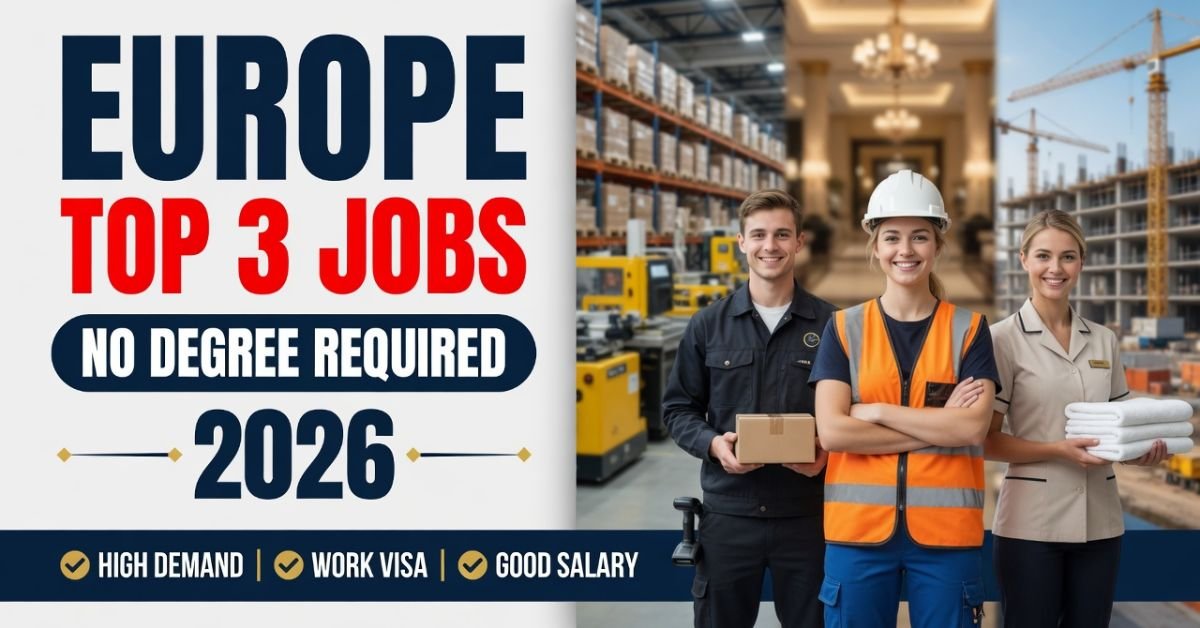
Generally, we have a number of career options across Europe, but the top 3 are Warehouse Workers, Hotel Housekeeping, and Construction Helpers. These career options do not require high qualifications and offer steady monthly salaries with pathways to long term residence.
1. Warehouse Workers & Order Pickers
Warehouse jobs are the most sought-after career options in this era. With the rise of technology, people prefer working as warehouse workers. Due to advancements and demand in e-commerce, automated logistics centers and distribution hubs come with high demand for warehouse workers.
The role of the warehouse worker is to act as an order picker. The primary job is to keep orders organized and move them as per the order. The stock is kept on inventory shelves and then is moved to the delivery trucks.
This career option is considered easy, but it is a subjective approach. Advanced machinery is also used for lifting heavy products. The primary duty is to sort and manage the inventory. Such as unpacking shipments, checking the stock, and organizing items in the warehouse shelves.
Whenever there is any order placed, after reading the order list, mostly order come digitally on headsets. Then workers retrieve items and securely package them for shipment. After this, loading and unload cargo from shipping containers and transport trucks. Warehouse workers also prepare items for dispatch.
Key Geographical Hotspots
- Germany: Home to massive global logistics parks near major transit hubs like Frankfurt, Leipzig, and North Rhine-Westphalia.
- The Netherlands: A prime European trade gateway with expansive distribution hubs centered around Rotterdam and Amsterdam Airport Schiphol.
- Poland: Rapidly becoming Central Europe’s primary fulfillment engine, housing massive fulfillment centers near Wroclaw, Poznan, and Warsaw.
Earnings & Contract Perks
There are different shipment services; some are government-backed while others are private. So, salary may be permanent or contract-based. The average salary for a warehouse worker is around €1,800 to €2,500 per month. As workers gain experience, the earning rate also increases on the basis of rank. But other than this, workers have the option to work at night, weekends, or voluntary overtime.
2. Hotel Housekeeping & Cleaning Staff
Europe contires are best known for tourists and people who visit for business meetings. With the rise of technology, advancements are emerging from Europe. So most people visit Europe, and it holds the title of the world’s most visited destinations, commercial sectors, and hospitality.
As most people visit Europe, they are not the citizens but the visitors, and they stay in hotels. Due to this domination of European hospitality, leisure, and commercial real estate face constant pressure at maintenence.
Hotel housekeeping jobs can really be good start to work in Europe. The role ensures that residential, commercial, and tourist properties stay clean and hygienic. The common duties of hotel housekeeping include:
- Guest Room Attending
- Public Area Sanitation
- Turnover and Facility Preparation
Key Geographical Hotspots
In Europe, the Mediterranean hubs experience huge annual travel through the major historical cities and coastal regions. In Greece and Croatia, resort markets situated at teh costs remian in intense demand for seasonal housekeeping staff.
Earnings & Contract Perks
This career option of hotel housekeeping offers an average salary of €1,500 to €2,100 per month. Hotel housekeeping also has contract perks like free or heavily subsidized accommodation and basic services like uniform cleaning, etc. Similarly, the governemtn accross the Europe issues 3 to 9 month seasonal work permits to help foreign workers fill the seasonal demand.
3. Construction Helpers & General Laborers
After warehouse and hotel housekeeping jobs, the most trending unskilled job in Europe is Construction Helpers and General Laborers. As we already know, that the europe has high visiting potential. To manage this demand, more hospitality sectors are established. Old infrastructure is updated. Residential development projects accross european union have created high demand for site labor.
Construction helper is a good career option in Europe according to some foreign skilled workers. General construction laborers provide support to skilled people on civil engineering, commercial, and residential sites.
Role Overview & Primary Duties
General construction laborers provide critical ground support to skilled tradespeople on commercial, civil engineering, and residential sites. Typical tasks include:
- Trade Support: Assisting masons, carpenters, plumbers, and electricians by preparing materials, mixing concrete, and setting up scaffolding.
- Material Transport: Loading, moving, and unloading heavy building supplies (bricks, drywall, steel bars) across work zones.
- Site Preparation & Maintenance: Clearing job sites, operating light equipment (jackhammers, compactors, cement mixers), and enforcing site safety standards.
Key Geographical Hotspots
- Germany: Experiencing sustained demand for infrastructure updates, commercial builds, and residential projects.
- Poland & Romania: Fast-growing construction and infrastructure markets heavily supported by European Union development funds.
Earnings & Contract Perks
- Average Salary: €1,800 to €2,700 per month.
- Physically Demanding Perks: The higher physical demands of construction labor translate into higher base pay, hazard pay, and opportunities to learn trade skills (masonry, concrete pouring, machinery operation) directly on the job.
- Long-Term Mobility: Work permits for infrastructure initiatives are often issued on multi-year renewable bases, creating a clear bridge to long-term residency.
At-a-Glance Sector Comparison
| Job Sector | Top Hiring Nations | Avg. Monthly Salary | Typical Contract Perks | Entry Barriers |
| Warehouse / Order Picker | Germany, Netherlands, Poland | €1,800 – €2,500 | Overtime bonuses, shift differentials, subsidized housing | Extremely Low (Basic English) |
| Housekeeping / Cleaning | Spain, Greece, Croatia, Italy | €1,500 – €2,100 | Provided housing, meal allowances, seasonal permits | Low (Seasonal Visas) |
| Construction Helper | Germany, Poland, Romania | €1,800 – €2,700 | On-the-job skill training, multi-year permits | Moderate (Physical Fitness) |
Also Read: Top 5 Successful Interview Tips: Build Confidence and Stand Out
Step-by-Step Guide: How to Secure Legal Work in Europe
If you live outside the European Union (EU) or European Economic Area (EEA), working legally in Europe requires an employer-sponsored work visa or seasonal permit.
- Search Official & Verified Job Portals:
Begin your job hunt on government-backed portals such as EURES (European Job Mobility Portal). Use search filters like “Visa Sponsorship” or “Seasonal Work Permit”. You can also browse verified national employment platforms like Make it in Germany or Poland’s Central Job Database.
2. Format Your CV to the Europass Standard:
Convert your resume into the official Europass CV format recognized by European hiring managers. Emphasize physical stamina, punctuality, languages spoken (even conversational English), and any relevant hands-on manual work experience.
3. Secure an Employment Contract & Labor Approval:
After passing your interview, the European employer must submit a labor market authorization request to prove no local or EU candidate was available for the vacancy. Once authorized, the employer sends you an official, signed employment contract.
4. Apply for Your National Work Visa (Type-D):
Submit your employment contract, proof of clean criminal record, medical certificate, and passport to the European embassy or consulate in your home country. Upon approval, your Long-Stay Type-D or Seasonal Work Visa will be stamped, allowing you to travel and work legally.
Frequently Asked Questions
Do I need to speak the local language (German, Dutch, Spanish)?
Not always. While learning basic local phrases is helpful for daily life, many e-commerce warehouses, international logistics hubs, and tourist-facing hotel operations use English as their main working language.
Can seasonal workers transition to permanent residency?
Seasonal visas (common in hospitality and agriculture) are typically times limited (3 to 9 months) and require workers to return home when the contract ends. However long-term contracts in warehousing and construction frequently offer paths to work permit renewals and eventual long-term residence status.
Can I bring my family with me on a non-EU unskilled work permit?
Usually not right away. Short-term and seasonal permits do not include family reunification rights. However, if you secure a multi year, renewable work permit (common in warehousing and construction) you can typically apply to bring your spouse and dependent children after 6 to 12 months of stable employment, provided you meet minimum income and housing requirements.
Is it safe to use recruitment agencies for these jobs?
Yes, but only if they are licensed. Under EU law, legitimate recruitment agencies never charge candidate placement fees; their commission is paid directly by the hiring employer. Always verify that an agency is registered with the destination country’s ministry of labor before sharing personal details.